

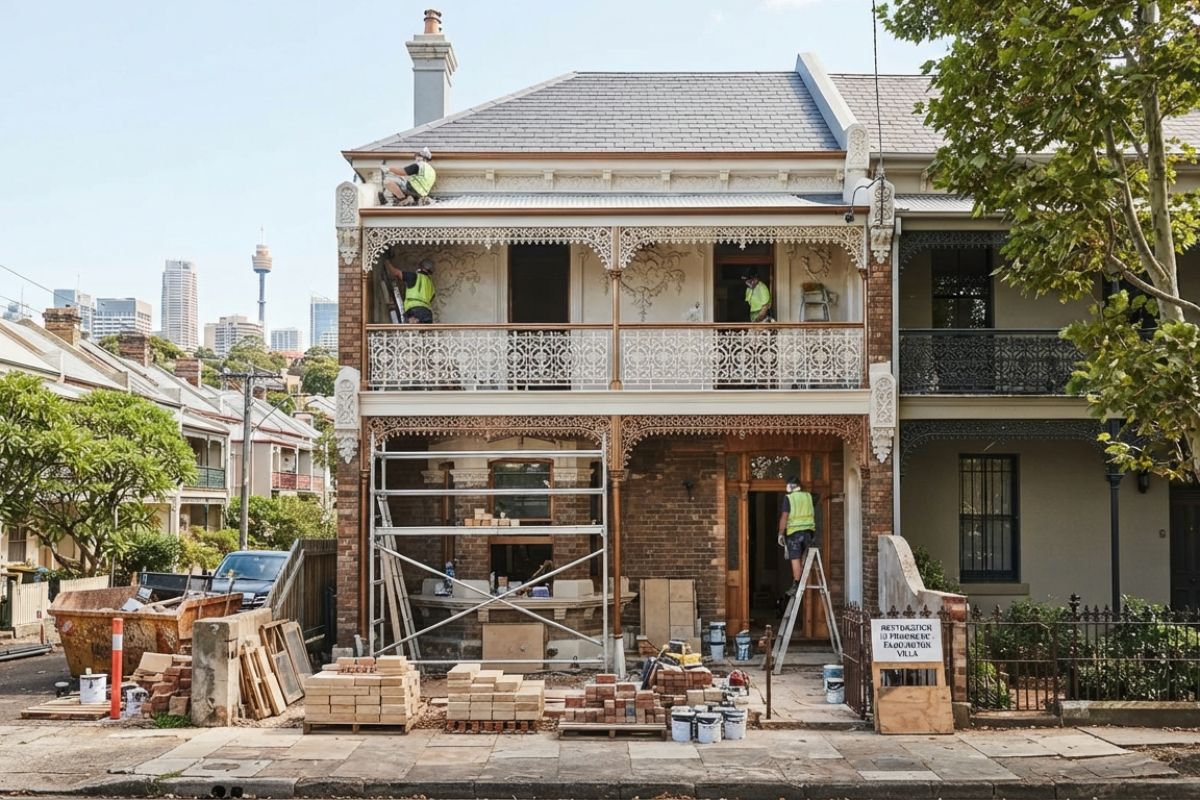
Victorian and Federation homes are admired for their craftsmanship, architectural details and distinctive character. From decorative ceiling roses to timber sash windows, these original features give older Australian properties an identity that modern construction often struggles to replicate.
However, owning a period property also comes with maintenance challenges. Timber may deteriorate, decorative tiles can crack and original plasterwork may become damaged over time. When renovation becomes necessary, homeowners face an important decision: should an original feature be preserved, repaired or replaced?
When restoring Federation home features, the best approach is generally to retain as much original material as practical while addressing safety, structural condition and modern living requirements.
This does not mean every old component must remain untouched. Instead, decisions should be based on the feature’s historical value, physical condition, repairability and the impact that replacement would have on the overall character of the property.
The rule of thumb: repair before replace
Most original features in a period home were built to be maintained, not discarded. Timber was often old-growth hardwood, iron was cast to last, and tiles were fired to take a century of foot traffic. A good restorer’s first question is not “what’s the replacement?” but “what’s actually failed?”
| Feature | Usually keep or repair | Replace when | Why it matters |
| Timber sash windows | Rattling, sticking, broken cords, flaking paint | Sashes are rotted through or frames have failed structurally | Repaired sashes with new cords and weather seals often outperform cheap replacements, and keep the facade intact |
| Tessellated tiles | Cracked or missing individual tiles, lifted sections | The base has failed across most of the floor | Matching tiles can be sourced or made; a full replacement in modern tiles changes the entry completely |
| Cast and wrought iron lace | Rust, missing pieces, flaking paint | Structural members are corroded beyond repair | Missing pieces can be recast from existing patterns |
| Ornate ceilings and roses | Cracks, loose sections, paint build-up | The ceiling is sagging and unsafe | Old lath-and-plaster ceilings can be re-fixed and repaired by specialists |
| Timber floors | Worn finish, gaps, a few damaged boards | Widespread rot or termite damage | Old hardwood boards sand back well and are hard to match new |
| Panel doors and joinery | Sticking, loose joints, layers of paint | Timber is rotted through | Stripping and refinishing reveals the original profile |
| Verandas and balconies | Loose boards, worn paint, minor rot | The structure is unsafe or not compliant | Balustrade height and structural safety come first; the character can be kept |
| Fireplaces | Mantels, surrounds and tiled hearths | The flue is unsafe and won’t be used | Even non-working fireplaces add character and value |
One caution before any repair work begins: most homes built before 1970 have lead-based paint somewhere under the newer layers, so old paint should be tested and removed by safe methods.
Why Repairing Original Features Is Often Better Than Replacing Them
Traditional building materials were often selected for their durability and suitability for the architectural style of the period. Many older timber windows, decorative plaster details and masonry elements can remain serviceable for decades when maintained properly.
Replacing an original feature may appear easier initially, but it can introduce several disadvantages.
First, modern replacement products may not match the original dimensions, profiles or materials. Second, removing original fabric can reduce the architectural integrity of a heritage property. Finally, replacement work may require additional alterations to surrounding walls, floors or decorative elements.
Repairing existing features can preserve their appearance while extending their useful life.
Before making a decision, consider the following:
- Is the original material structurally sound?
- Can the damage be repaired without removing the entire feature?
- Can replacement materials match the original appearance?
- Is the feature important to the property’s heritage significance?
- Are there safety or building compliance requirements?
- Will the proposed work require council approval?
The answers will vary depending on the individual building.
Modern comfort without losing the character
Keeping original features doesn’t mean living in 1905. The trick is to put modern upgrades where they won’t damage what makes the house special.
- Kitchens and bathrooms are where modern design belongs. They were usually rebuilt several times already, so a contemporary fitout rarely costs any heritage value. Plan carefully, as our guide to planning your kitchen remodel explains.
- Lighting is where period ceilings get damaged most often. Cutting rows of downlights into an ornate lath-and-plaster ceiling can crack it and destroys the look. Pendants from existing roses, wall lights and lamps work better. If you do want LED ceiling lights, use them in rear extensions and modern rooms.
- Insulation and draught-proofing make a huge difference in old homes. Ceiling insulation, sealing gaps around sash windows and draught strips on doors improve comfort without changing anything you can see.
- Rear extensions can be fully modern. Many heritage approaches encourage a clear contrast between old and new, rather than a fake period copy.
Important Considerations Before Starting Restoration
Older properties can contain hazardous materials, including lead-based paint and asbestos-containing building products.
Before sanding, stripping or removing old materials, identify potential hazards and arrange appropriate testing where necessary.
Heritage status should also be checked before making changes. Some properties are individually listed, while others are located within a heritage conservation area. Approval requirements vary depending on the property and proposed work.
It is worth checking with the relevant local council or heritage professional before altering significant features.
Finding the right trades
Restoration needs different skills from general building. Ask any contractor:
- Can you show me period homes you’ve restored, not just renovated?
- Will you repair original material where possible, or is replacement your default?
- How do you handle lead paint on old timber and iron?
- Do you know whether my home is a heritage item or in a heritage conservation area, and what that means for approvals?
Sydney specialists such as Heritage Restorations and Renovations work across sash windows, cast iron, tessellated tiling, timber floors and facades in Victorian and Federation homes, and can advise on what’s worth saving before anything is removed.
FAQ
Are original sash windows energy efficient?
Not on their own, but repaired sashes with new seals and draught-proofing perform far better than neglected ones. Secondary glazing on the inside can improve them further without changing the facade.
Can I replace cracked tessellated tiles myself?
It’s possible for a few tiles, but lifting old tiles without damaging neighbours and matching the base takes experience. Keep any loose pieces; they’re useful for matching.
Do I need approval to replace original features?
If your home is a heritage item or in a heritage conservation area, changes to the facade or significant fabric often need council approval or an exemption. Check with your council before you start.
Is restoration always more expensive than replacement?
Not always. Repairing a sash window or a section of iron lace can cost less than a quality replacement, and it keeps the value that original features add.
